Almost everyone reading this has a working relationship with two molecules.
You know what a couple of drinks does. You probably know what an edible does, or you know someone who found out the hard way. Between them, alcohol and THC cover most of what people in North America reach for when they want the evening to feel different than the afternoon did.
There is a third one. It is a plant, it is legal, it is completely different from either of them at the level of what it touches in your brain, and almost nobody here has heard of it yet.
So let's do this properly. One section each. What it feels like, what it is actually doing in your head, and what it costs you. Then we will put all three next to each other and you can decide.
You know this one.
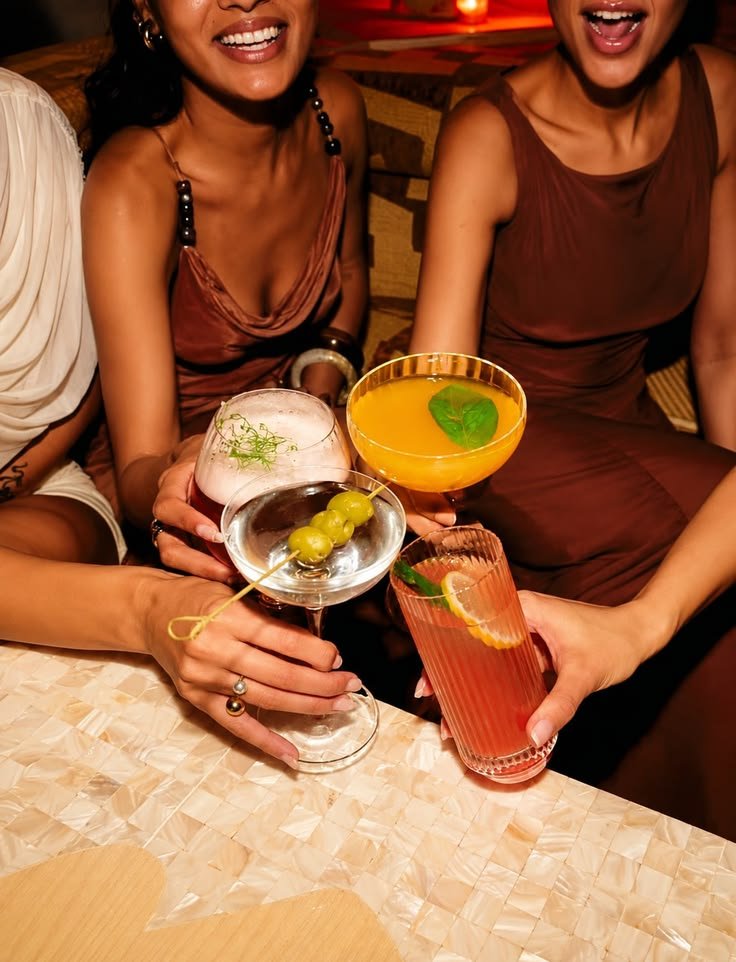
Drink one is genuinely great. The edge comes off, the room warms up, you get funnier and so does everyone else. Drink two extends it. Somewhere around drink three the curve turns over: you are not getting more relaxed anymore, you are getting less precise. Volume up, judgment down, memory patchy.
That turn is not a personal failing or a question of tolerance. It is built into the molecule. Alcohol does not have a plateau where it holds you at "pleasantly loose." It just keeps going in the same direction, and the direction ends in sedation.
Ethanol is a blunt instrument. It is the actual pharmacology. Most psychoactive substances bind to a specific receptor they happen to fit. Alcohol does not. It is a small, promiscuous molecule that dissolves into your neural membranes and perturbs several systems at once.
Two dominate. It potentiates GABA-A, your brain's principal inhibitory signal, which is the brakes. And it blocks NMDA receptors, your principal excitatory signal, which is the accelerator. Brakes on, accelerator off, whole brain at once. That is the loosening, and further up the dose curve it is also the slurring, the stumbling, and eventually the unconsciousness. Same mechanism throughout. Only the amount changes.
It also produces a dopamine bump in the reward pathway early on, which is the part that makes the first drink feel like the night is starting, and which is a meaningful part of why alcohol is habit-forming.
Then comes the correction. Your brain notices that its excitatory signalling has been suppressed for hours and compensates by cranking glutamate back up. The alcohol clears. The compensation is still running. That rebound is the 3 a.m. wake-up, the racing heart, the jangly morning, the low-grade dread attached to nothing. Meanwhile your liver has spent the night converting ethanol into acetaldehyde, a genuinely toxic intermediate, rather than doing anything restorative for you.
And the sleep does not count. Alcohol is excellent at knocking you out and terrible at letting you sleep. It suppresses REM and compresses deep sleep, so eight hours in bed buys you maybe four hours of the useful kind. Sedation is not sleep.
In 2010 David Nutt and colleagues published a paper in The Lancet that is still the reference point for this conversation. A panel of drug harm experts scored twenty substances across sixteen weighted criteria, nine covering harm to the user and seven covering harm to everyone else.
Alcohol came first. Overall harm score of 72, ahead of heroin at 55 and crack cocaine at 54. Cannabis scored 20.
Overall harm scores, Nutt et al., The Lancet, 2010
The reason alcohol tops a list containing heroin is the harm-to-others column, where alcohol scored 46 against heroin's 21. This is the part that gets left out when the paper is quoted in a headline. Alcohol is not the most damaging drug to the individual using it. It is the most damaging drug in aggregate, because of what it does to the people around the person using it: violence, road deaths, family breakdown, emergency rooms, the economic bill.
The individual picture has also been revised downward since. The old finding that moderate drinking protects your heart has largely collapsed under better methods, because the comparison group of "non-drinkers" quietly included people who had already quit for health reasons. Canada's 2023 national guidance dropped the idea of a safe limit entirely and published a continuum instead: two standard drinks a week or fewer and you likely avoid alcohol-related consequences, three to six and cancer risk climbs, seven or more and cardiovascular risk rises steeply. More than two on a single occasion raises injury risk regardless of your weekly total.
Add the dependence profile, roughly 13 percent of American men and 8 percent of women meeting criteria for alcohol use disorder, plus a withdrawal syndrome that can kill you without medical supervision, and you have the most consequential drug in the room by a wide margin. It is also the one you can buy at the grocery store.
Much more variable than alcohol, and the variability is the story.
Low dose, favourable setting: relaxed, funnier, absorbed. Food improves. Music improves. Time loosens its grip a little. It is a nice place to be, and for a lot of people it is a nicer place than two drinks.
Higher dose, or the wrong night, or the wrong person: it inverts. Time stretches uncomfortably. Your heart rate climbs and you notice it climbing. The room feels observational. The thing you took to turn the anxiety down turns it up instead, and now you are sitting in it for four hours with no exit. That flip is a dose response, not a character flaw, and almost everyone who uses cannabis regularly has met it at least once.
The next morning is not free either. It is not an alcohol hangover, but grogginess is common, and the REM suppression is real, which is the same trick alcohol pulls on your sleep.
Here is what makes cannabis different from alcohol in kind, not just in degree: you already have this system.
Your endocannabinoid system runs quietly in the background, releasing molecules like anandamide that travel backwards across the synapse and tell the transmitting neuron to ease off. It is a volume knob for your own signalling, and it is involved in mood, appetite, pain, memory, and stress response.
THC binds to CB1 receptors in that system and pushes considerably harder than your own molecules do, and everywhere at once rather than where your body would have chosen. That is the high. It is also why the effects fan out across so many domains simultaneously: the same receptors govern appetite, time perception, short-term memory, anxiety, and heart rate, so all of them move together.
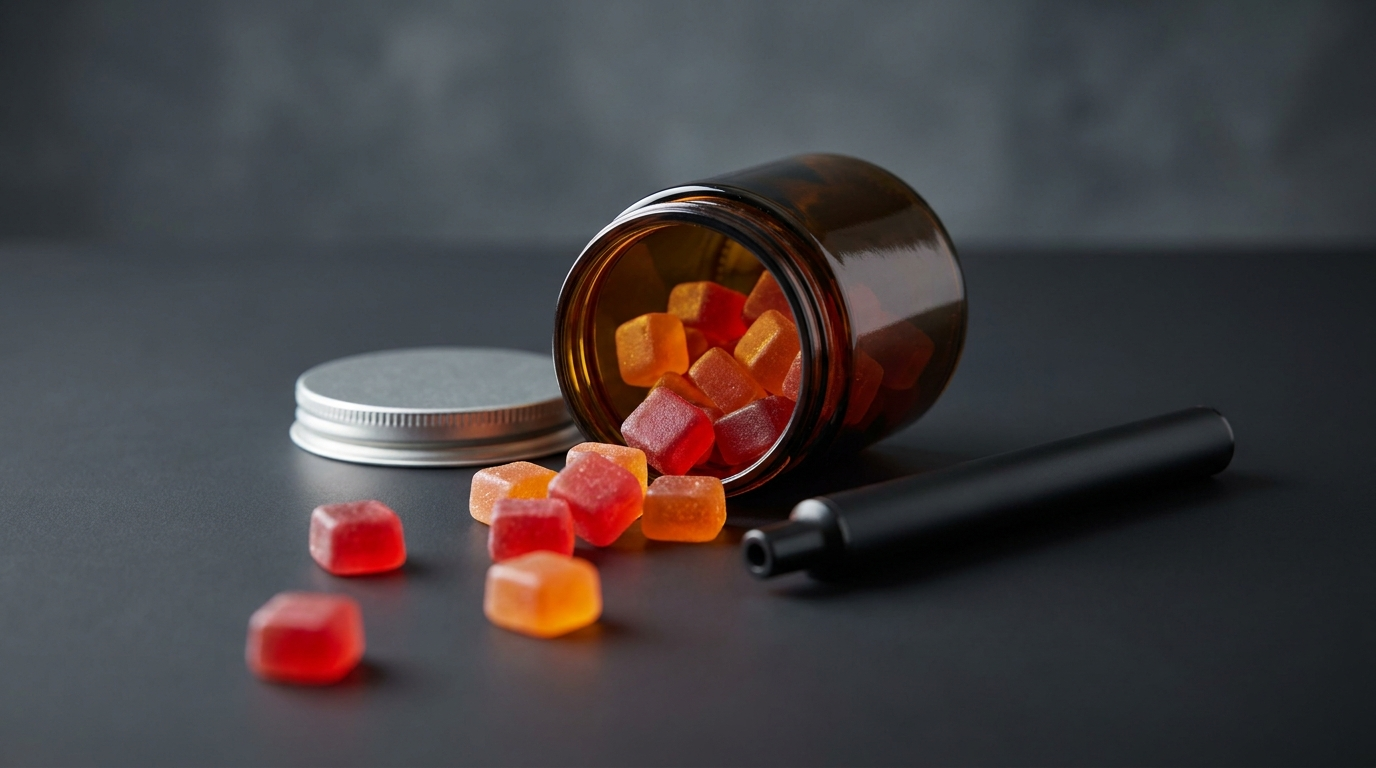
Route changes everything. Inhaled, THC is in your bloodstream in minutes and largely done in two to three hours. Eaten, it goes through your liver first and gets converted into 11-hydroxy-THC, which crosses into the brain more readily, hits harder, and lasts far longer. That single metabolic detail is behind most edible horror stories. Nothing happens, you take another, and ninety minutes later two doses arrive at once wearing a stronger coat.
Regular use also produces genuine neuroadaptation. CB1 receptors downregulate. That is tolerance, and its mirror image is withdrawal: irritability, insomnia, appetite loss, and low mood for a week or two after stopping. Most people have been told this does not exist.
The cannabis conversation has been running on outdated information, and this week it caught up.
A study published in JAMA Psychiatry on August 19 examined nearly 187,000 American adults surveyed between 2021 and 2024. Past-year cannabis use disorder among men went from 7.3 percent to 9.3 percent. Among women, 4.5 to 5.6. Alcohol use disorder over the same period held flat or declined. The lead explanation from the authors, including the director of the National Institute on Drug Abuse, was potency: stronger product, higher addiction risk.
The potency numbers are not subtle. Average THC content in seized flower was about 4 percent in the mid-nineties. By 2022 it was over 16 percent. Concentrates run 60 to 90 percent. Researchers have proposed 5 mg as a standard THC unit, roughly analogous to a standard drink, and a single commercial gummy is routinely 10 mg with a hundred in the package. The unit got smaller and the servings got much bigger at the same time.
So the picture now: among people who use cannabis, roughly three in ten show symptoms of a use disorder, against fewer than two in ten among drinkers. Daily and near-daily use with high-potency product is the threshold where the risk climbs sharply, both for dependence and, in people with existing vulnerability, for psychosis. There is also cannabinoid hyperemesis syndrome, which is exactly as unpleasant as the name suggests and which almost nobody has heard of.
None of that makes cannabis dangerous in the way alcohol is dangerous. Nutt's panel scored it at 20 against alcohol's 72, and there is no established lethal dose. But "it's natural, it isn't addictive" was a claim made about a plant that was four percent THC, and it was carried forward, unexamined, onto a product four to twenty times stronger.
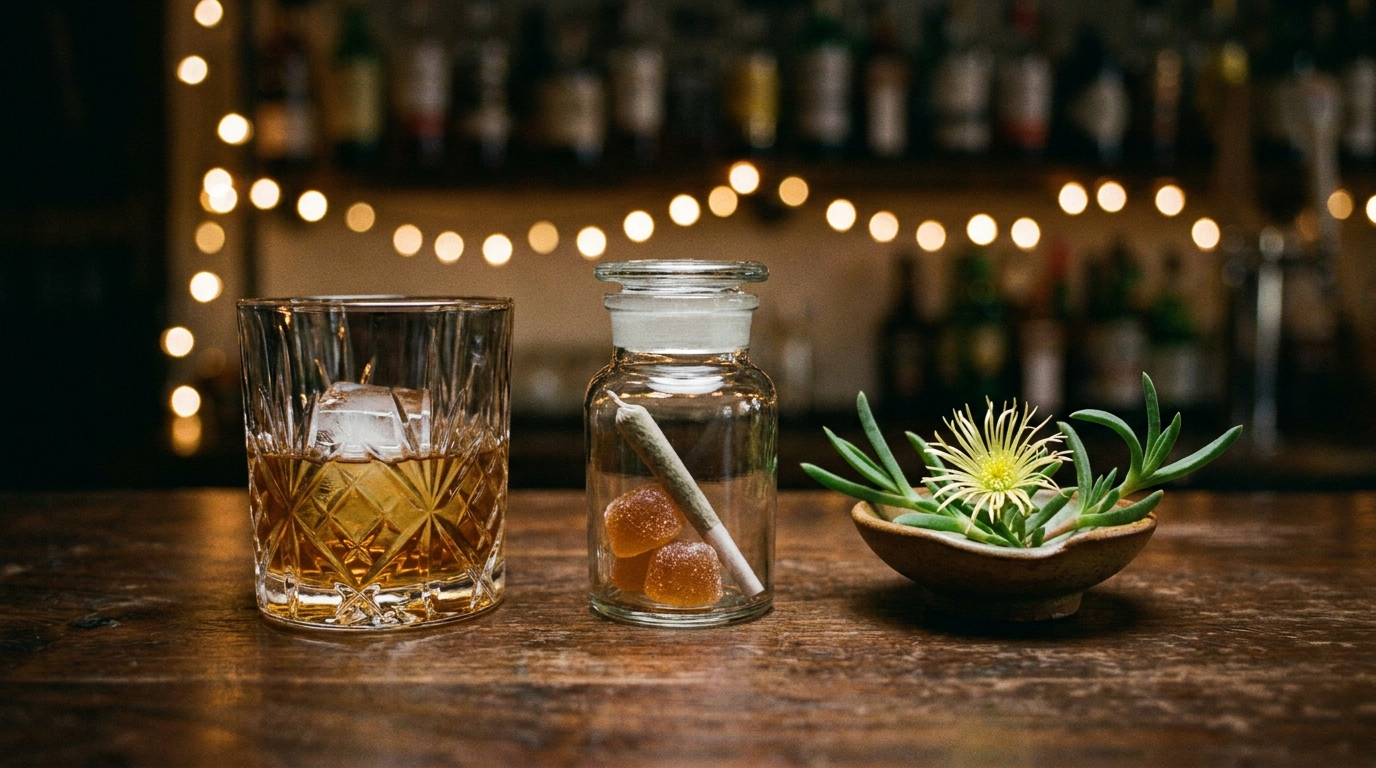
Now the one you have probably never tried.
Kanna comes on in about fifteen minutes, and the first thing most people notice is that something has quietly released in the chest and shoulders. Then the social part arrives, and it is not subtle. Talking gets easy. The gap between having a thought and saying it out loud narrows. Other people become more interesting and you become more interested in them. There is a warmth to it that is genuinely euphoric at the right dose, closer to the good part of a night out than to anything in the calm-and-wellness aisle.
At higher doses it gets more physical. Touch feels better. Music sits differently. Colours and light get a little more vivid. The traditional South African literature describes euphoria and intoxication at larger amounts of the raw plant, and that is not marketing language, that is the ethnobotanical record.
What it does not do is take your head. That is the whole distinction. You are lifted, not lowered. You stay articulate, you stay in the conversation, you can drive the night rather than being carried through it, and you remember all of it in the morning.
Loose but not sloppy. Warm but not woozy. And no comedown on the other side, because there is no debt to settle.
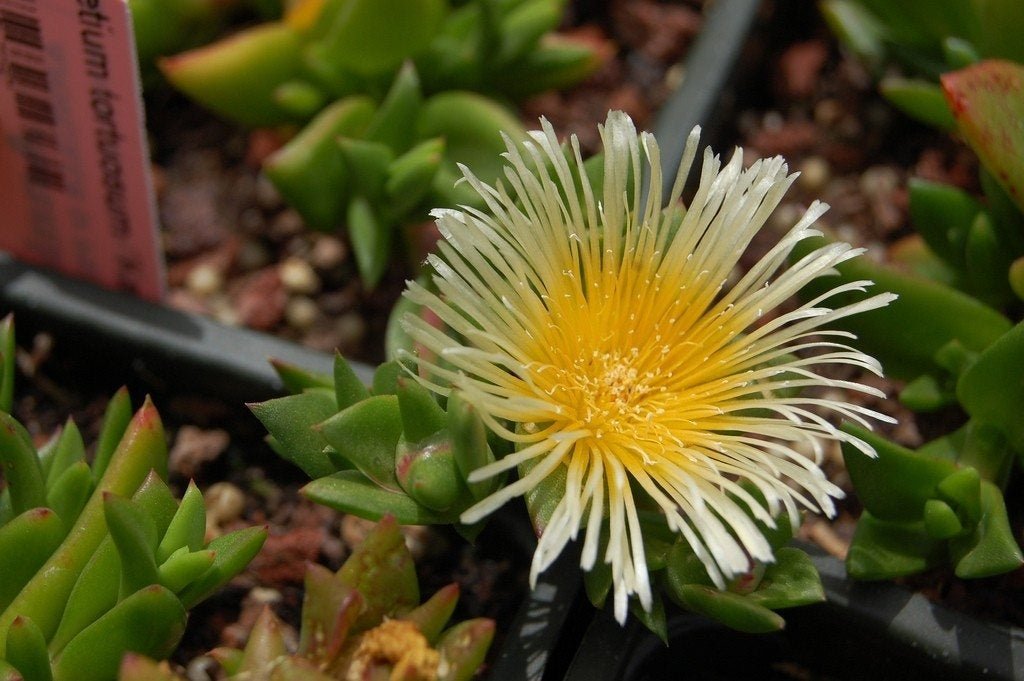
Kanna is Sceletium tortuosum, a small succulent from the dry parts of South Africa. The San and Khoikhoi have chewed and fermented it for centuries. They called it kougoed, roughly "something to chew." They worked out the good part by feel, several hundred years before anyone had a word like nootropic.
Its principal alkaloid is mesembrine, and it does two things simultaneously.
It inhibits serotonin reuptake. Your neurons release serotonin and then immediately vacuum most of it back up for reuse. Mesembrine slows the vacuum. More serotonin stays in the synapse a beat longer, the signal lingers, and mood drifts upward. This is the same broad mechanism family as a class of prescription antidepressants, which is precisely why the drug interaction caveat further down is not optional.
It inhibits PDE4. This is the part that keeps kanna from being a nap. PDE4 breaks down cyclic AMP, an intracellular messenger involved in alertness and cognitive flexibility. Inhibit the enzyme, cyclic AMP stays elevated, and you get the clarity that runs alongside the lift. It is also the mechanism behind the cognitive findings in the small human trials that exist.
Now look at what is absent. No GABA potentiation, so it is not a sedative. No CB1 agonism, so it is not an intoxicant in the cannabis sense. No dopamine flood in the reward pathway of the kind that drives compulsive use. It is not suppressing your brain and it is not overriding one of your systems. It is adjusting the gain on machinery that is already running.
| Alcohol | THC | Kanna | |
|---|---|---|---|
| What it acts on | GABA-A up, NMDA down, brain-wide | CB1 receptors in your endocannabinoid system | Serotonin reuptake plus PDE4 |
| Direction | Suppresses | Overrides | Adjusts |
| The feeling | Warm, then blurry | Relaxed, or anxious, depending on dose | Warm, social, clear, euphoric at the right dose |
| Onset | 15 to 30 minutes | Minutes inhaled, up to two hours eaten | Around 15 minutes |
| Head stays clear | No | Not really | Yes |
| Sleep | Sedated, REM suppressed | REM suppressed | Left alone |
| Next-day cost | The hangover, and the day after it | Grogginess | None reported |
| Dependence | Yes, and withdrawal can be fatal | Yes, and rising with potency | Not established, no known dependence profile |
| Nutt Lancet harm score | 72, first of twenty | 20, eighth of twenty | Not assessed |
| Getting stronger every year | No | Yes, dramatically | No |
Not that alcohol and cannabis are villains. Millions of people use both without incident, and we are the last company on earth with standing to lecture anyone about wanting to feel good on a Friday.
The argument is narrower than that. Both of the options you already know work by interfering with something. Alcohol suppresses your entire central nervous system and charges you for the privilege over the following two days. THC overrides a regulatory system you already have, using a product that has quietly gotten many times stronger than the one your assumptions were formed around.
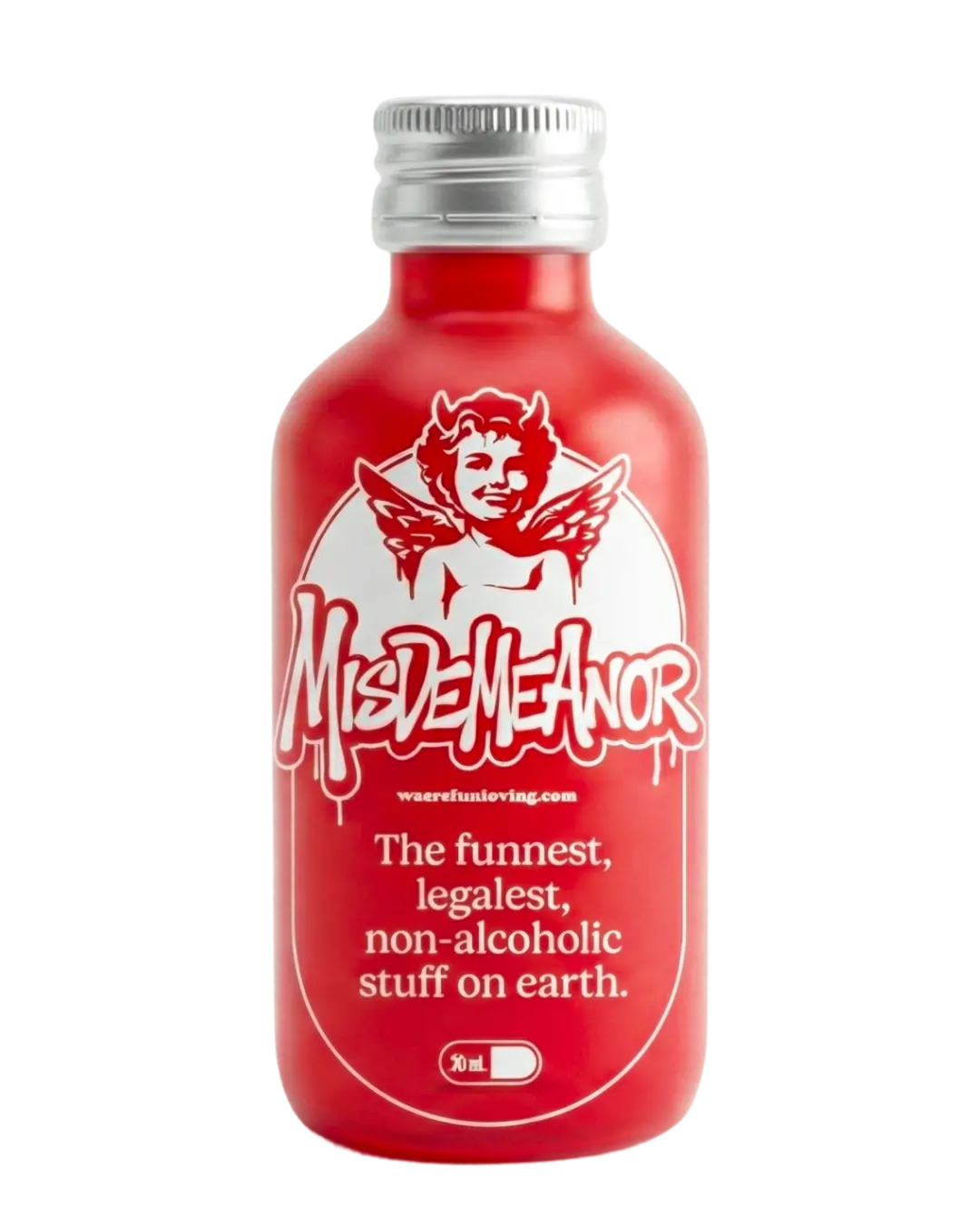
Kanna does neither. It works with the machinery instead of against it, which is why the effect can be substantial and the morning can still be free. That is not a small distinction. It is the entire reason we built a company around a succulent almost nobody had heard of.
The funnest, legalest, no-booze-required stuff on the planet.
Buy Misdemeanor →Drop your email below to stay updated.
No spam. Unsubscribe anytime.
You're on the list. Talk soon.